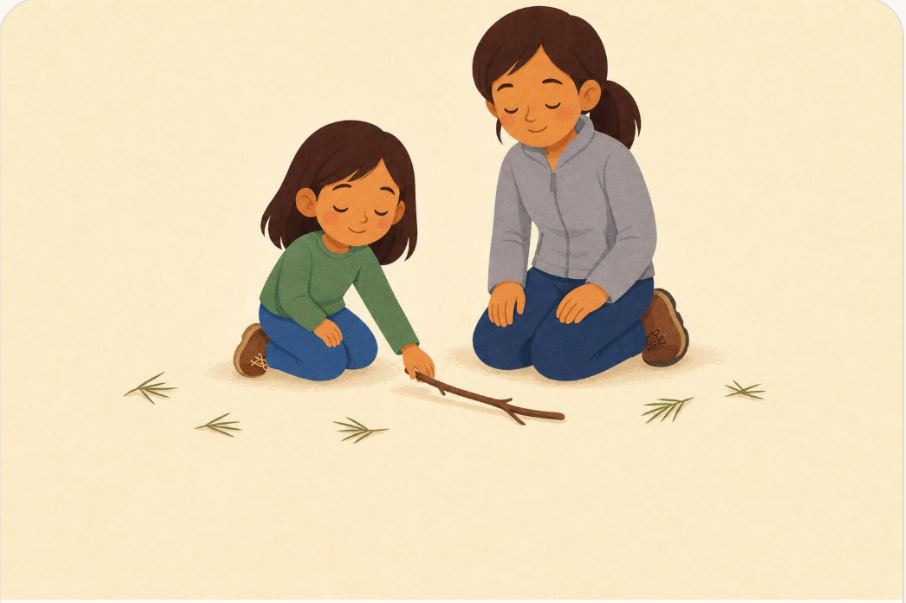
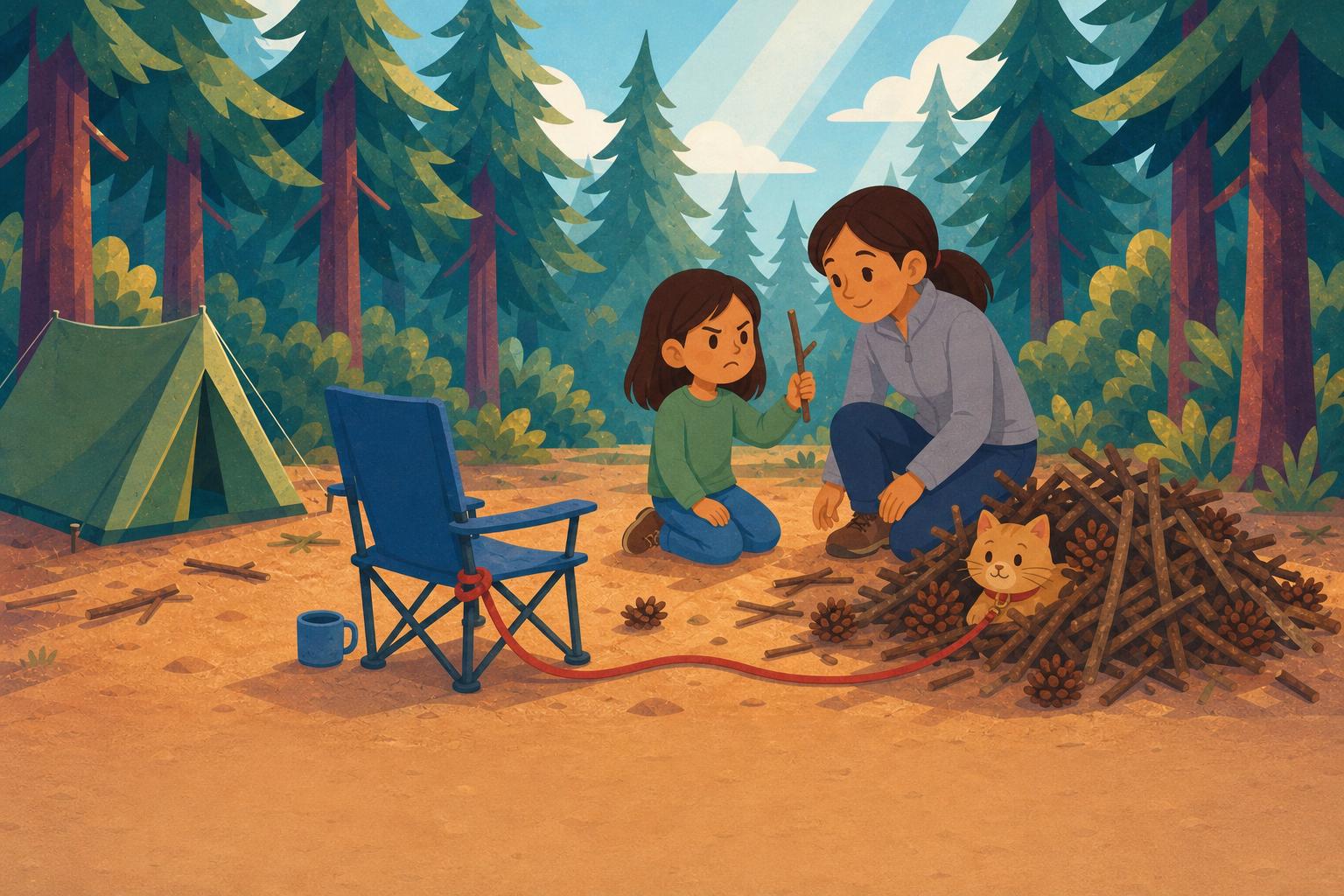
Mom put down her tea. She came and knelt close beside Mia. "Oh, Mia," said Mom. "It fell after all your work. You look so cross." Mom did not tell her to stop. She just stayed close.
Mia nodded. "I am so, so cross." "I'm right here," said Mom. "You're cross, so one slow breath first, then we look." Mia held the stick and looked at Mom.
Mom breathed in slow. Mia breathed in too. Mmm. The air smelled like the green trees. They let it out, slow and long. Mia's hands felt looser. She put the stick down on the ground, gently.
What Mia does, and why
Mom kneels close and says Mia looks so cross. Mia is holding a stick tight. They take one slow breath together, smelling the pine trees, and Mia puts the stick down gently before they look at the pile.
From the book’s story plan, written before the story itself.
The idea behind it
When the child is upset, name the feeling before solving anything.
For age 5: More connected events: an attempt that goes wrong, a mistake, a rule or a misunderstanding, and an alternative approach that works a little better. (developmental guidance)
What the research does and doesn’t show
Both sources are about parent programmes on emotion talk with young children, not about pausing after a mistake or about a book. A large review found that short, regular attention and slow-breathing activities helped children aged 3 to 11 a little with stopping and waiting, though the benefit faded later and few studies were included. It did not test books.
- England-Mason et al. (2023), Emotion socialization parenting interventions targeting emotional competence in young children: A systematic review and meta-analysis of randomized controlled trials
- Havighurst et al. (2010), Tuning in to Kids: improving emotion socialization practices in parents of preschool children—findings from a community trial
- Takacs & Kassai (2019), The efficacy of different interventions to foster children's executive function skills: A series of meta-analyses
“What does Mia do with the stick after the slow breath?”
A question to pause on while you read. There’s no right answer to find.
You and your child build a small block tower, then gently tip it over together.
Your child says: “I'm cross. Can we breathe slowly together?”
You say: “Yes. Slow breath. Now let's look at it.”
Build it again, and this time you play the one who feels cross while your child invites the slow breath and says, 'Now let's look at it.'
This sample was made with Little Words for a made-up family. Every story gets notes like these from its own story plan, in the reader’s “For grown-ups” panel.